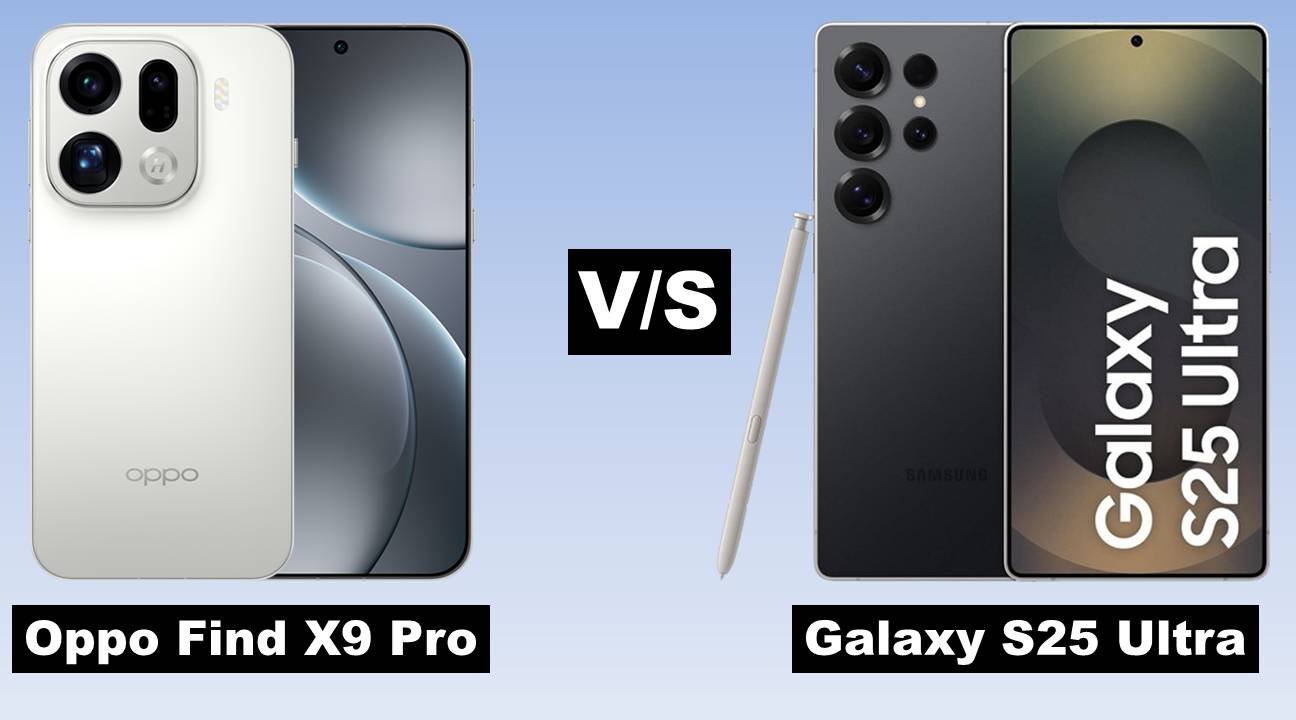
The flagship smartphone market in 2025 is more competitive than ever, and two of the most talked-about contenders are the Oppo Find X9 Pro and the Samsung Galaxy S25 Ultra. Both devices represent the pinnacle of innovation from their respective brands, boasting cutting-edge designs, powerful processors, and professional-grade cameras. But which one truly offers better value for your money? Let’s dive into a detailed comparison of these two powerhouses.
Oppo Find X9 Pro vs Samsung Galaxy S25 Ultra
Design and Build Quality
Both smartphones showcase premium craftsmanship with a focus on durability and aesthetics. The Oppo Find X9 Pro features a glass front and back with an aluminum frame, weighing 224g and measuring 161.3 x 76.5 x 8.3 mm. It’s IP68/IP69-rated, meaning it can withstand dust, water, and even high-pressure jets.
The Samsung Galaxy S25 Ultra, on the other hand, takes it up a notch with a titanium frame (grade 5), Gorilla Armor 2 glass, and anti-reflective coating, offering superior toughness and scratch resistance (Mohs level 6). Slightly larger at 162.8 x 77.6 x 8.2 mm, it weighs 218g and comes with an integrated S Pen stylus, adding an edge in productivity.
While both phones are built to last, Samsung’s titanium frame and stylus inclusion make the S25 Ultra stand out in both utility and luxury appeal.
Display Comparison
The Oppo Find X9 Pro sports a 6.78-inch LTPO AMOLED panel with 1272 x 2772 pixels resolution, a 120Hz refresh rate, and an incredible peak brightness of 3600 nits. It supports HDR10+, Dolby Vision, HDR Vivid, and Ultra HDR imaging, delivering a vivid and immersive viewing experience.
Samsung counters with a slightly larger 6.9-inch Dynamic LTPO AMOLED 2X display with a 1440 x 3120 pixels resolution and 2600 nits peak brightness. Though not as bright on paper as Oppo’s, Samsung’s DX anti-reflective coating and Gorilla Armor 2 protection provide better outdoor visibility and screen clarity.
Both displays are exceptional, but the Galaxy S25 Ultra offers higher pixel density (~498 ppi) and better reflection handling, while the Find X9 Pro impresses with its record-breaking brightness and vibrant color rendering.
Performance and Software
Powering the Oppo Find X9 Pro is the MediaTek Dimensity 9500 (3nm) chipset with an Arm G1-Ultra GPU, offering flagship-level performance. It runs on Android 16 with ColorOS 16, and Oppo promises five major Android upgrades.
The Samsung Galaxy S25 Ultra uses the all-new Qualcomm Snapdragon 8 Elite (3nm) processor paired with the Adreno 830 GPU clocked at 1200 MHz. This chip is one of the fastest in the smartphone world, optimized for gaming, AI, and multitasking. It runs Android 15 with One UI 7, backed by seven years of Android updates, setting a new industry benchmark for longevity.
In terms of raw power, Samsung’s Snapdragon 8 Elite outperforms MediaTek’s Dimensity 9500, making the S25 Ultra the superior choice for heavy users and gamers seeking ultimate performance and extended software support.
Camera Comparison
Both phones pack cutting-edge camera setups designed for professionals and enthusiasts alike.
The Oppo Find X9 Pro houses a triple-lens system featuring:
- 50 MP (wide) with OIS
- 200 MP (periscope telephoto, 3x optical zoom)
- 50 MP (ultrawide, 120° FOV)
Enhanced with Hasselblad Color Calibration, Laser AF, and 10-bit Dolby Vision recording, it delivers accurate color tones, excellent low-light clarity, and cinematic-quality videos.
In contrast, the Samsung Galaxy S25 Ultra features a quad-camera setup with:
- 200 MP (wide, OIS)
- 50 MP (periscope telephoto, 5x optical zoom)
- 10 MP (telephoto, 3x optical zoom)
- 50 MP (ultrawide, Super Steady video)
Samsung also supports 8K video recording, 10-bit HDR, and HDR10+, offering flexibility for professionals. The integration of Best Face AI, Laser AF, and dual telephoto lenses gives the Galaxy S25 Ultra superior zoom versatility and sharper details in varying light conditions.
While Oppo’s 200 MP periscope lens is outstanding for portrait and zoom shots, Samsung’s multi-lens versatility and 8K video support make it more well-rounded for creators.
Selfie Camera
The Oppo Find X9 Pro features a high-resolution 50 MP selfie camera capable of 4K@60fps video, providing superb detail and clarity for vloggers.
Samsung takes a different approach with a 12 MP dual pixel PDAF camera that supports HDR10+ video. Despite the lower megapixel count, Samsung’s image processing and skin tone accuracy make it ideal for social media and professional calls.
Battery and Charging
Oppo leads in battery capacity with its massive 7500mAh battery, supporting 80W wired, 50W wireless, and 10W reverse wireless charging. It also supports multiple standards like UFCS, PPS, and PD, ensuring universal compatibility.
Samsung’s 5000mAh battery might sound modest, but it is optimized for endurance and efficiency. It supports 45W wired, 15W wireless (Qi2 Ready), and 4.5W reverse wireless charging.
The Find X9 Pro clearly dominates in raw battery capacity and charging speed, while the Galaxy S25 Ultra provides balanced performance with better battery optimization and safety management.
Special Features and Connectivity
Both devices include Wi-Fi 7, NFC, infrared ports, and ultrasonic under-display fingerprint sensors. However, Samsung adds several premium features such as:
- S Pen stylus for note-taking and creative tasks
- Samsung DeX and Wireless DeX for desktop-like experiences
- Ultra Wideband (UWB) support for spatial tracking
Meanwhile, Oppo offers satellite connectivity (available only on the 1TB variant), giving it a unique advantage for emergency communications.
Price in India
- Oppo Find X9 Pro: ₹74,990 (expected)
- Samsung Galaxy S25 Ultra: ₹1,23,499 (official starting price)
The price gap is significant — over ₹48,000 — and reflects Samsung’s advanced build materials, processor performance, and exclusive features like the S Pen and UWB.
Final Verdict: Which One Should You Buy?
Both the Oppo Find X9 Pro and Samsung Galaxy S25 Ultra are exceptional flagships, but they cater to slightly different audiences.
Choose Oppo Find X9 Pro if you want superior battery life, ultra-bright display, and a flagship camera experience at a more affordable price. It’s ideal for multimedia lovers and users seeking maximum value.
Choose Samsung Galaxy S25 Ultra if you prioritize raw performance, long-term software updates, professional photography, and productivity features like the S Pen and DeX.
In short, Oppo wins on endurance and value, while Samsung dominates in power, innovation, and ecosystem experience.
Explore our News Section for daily updates and the latest tech news. Join our WhatsApp Channel for instant updates.