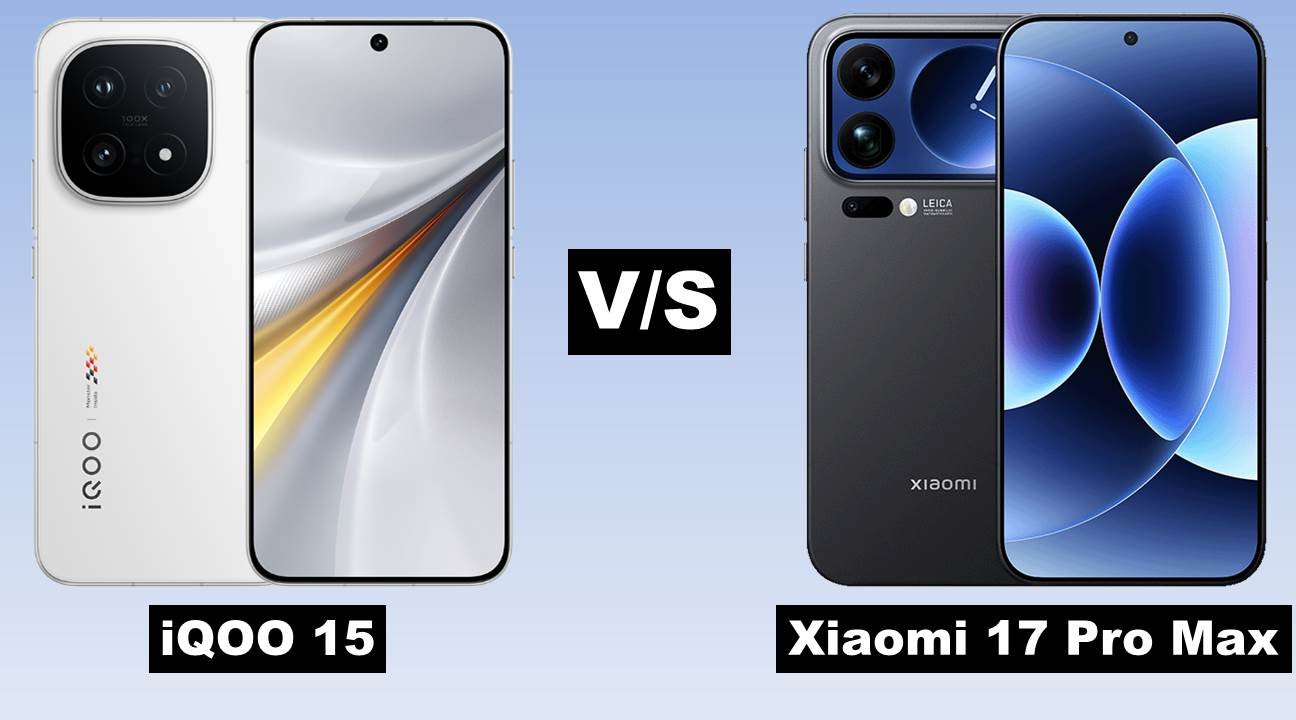
The smartphone market in 2025 has seen an impressive wave of innovation, and two major players — iQOO 15 and Xiaomi 17 Pro Max — have quickly captured attention with their next-generation specs and design philosophies. Both devices promise unmatched performance, striking displays, and premium camera setups. However, when comparing them head-to-head, key differences emerge that help determine which flagship is right for you.
The iQOO 15 and Xiaomi 17 Pro Max both offer premium build quality and excellent durability. The iQOO 15 features a sleek glass design with a color-changing rear panel, adding flair for users who like visual dynamism. It also carries an IP68/IP69 rating, providing protection against dust, immersion, and even high-pressure water jets.
In comparison, the Xiaomi 17 Pro Max adopts a more sophisticated design with an aluminum frame and Dragon Crystal Glass 3 protection. It also features an IP68 rating, but with superior water resistance—surviving up to 6 meters underwater for 30 minutes. Additionally, Xiaomi introduces an innovative secondary AMOLED display on the back, enhancing functionality and style.
Verdict: Xiaomi takes a slight lead here due to its premium build, stronger glass protection, and secondary rear display.
The iQOO 15 boasts a 6.85-inch LTPO AMOLED panel with 144Hz refresh rate, HDR10+, and Dolby Vision. With a stunning 6000 nits peak brightness, this display is among the brightest ever seen on a smartphone, making it ideal for outdoor use and HDR content.
The Xiaomi 17 Pro Max, on the other hand, offers a 6.9-inch LTPO AMOLED display supporting 68 billion colors, Dolby Vision, and a 2160Hz PWM dimming rate that enhances eye comfort. It peaks at 3500 nits, slightly less bright than iQOO’s panel, but it compensates with dual displays—a secondary 2.9-inch AMOLED screen on the back for quick interactions and selfies.
Verdict: iQOO wins on brightness and refresh rate, while Xiaomi scores on color richness and innovation with the rear display.
Both phones are powered by the latest Snapdragon 8 Elite Gen 5 (3nm) chipset, featuring the Oryon V3 Phoenix architecture with clock speeds up to 4.6 GHz. Performance-wise, both are equally fast and efficient, excelling in gaming, multitasking, and AI-driven tasks.
The iQOO 15 runs on Android 16 with OriginOS 6, offering a clean, performance-centric interface. Meanwhile, Xiaomi’s HyperOS 3 brings advanced customization and optimization, particularly for multitasking and integration with other Xiaomi ecosystem devices.
Verdict: Both are performance monsters, but Xiaomi’s HyperOS 3 provides a more refined, feature-rich experience for daily use.
Camera capabilities often decide the flagship winner, and both brands have stepped up their game.
The iQOO 15 features a triple 50MP setup—wide, periscope telephoto (3x optical zoom), and ultrawide lenses. It supports 8K video recording, gyro-EIS, and strong stabilization performance.
In contrast, the Xiaomi 17 Pro Max raises the bar with a Leica-engineered triple 50MP setup, including a larger 1/1.28" primary sensor, 5x optical zoom, and advanced color spectrum sensor. It supports HDR10+, Dolby Vision, and 10-bit LOG recording, offering cinematic-level control.
Verdict: Xiaomi 17 Pro Max clearly leads in photography and videography, thanks to Leica optics and advanced HDR capabilities.
The iQOO 15 comes with a 32MP front camera capable of 4K recording, while the Xiaomi 17 Pro Max upgrades this to a 50MP sensor with PDAF and HDR10+ video. The difference in detail and clarity, especially in low-light selfies, is noticeable in Xiaomi’s favor.
Verdict: Xiaomi 17 Pro Max offers a superior front camera experience.
Battery life and charging speed play crucial roles in modern flagships.
The iQOO 15 packs a 7000 mAh battery with 100W wired and 40W wireless charging. It delivers excellent endurance for power users.
Meanwhile, the Xiaomi 17 Pro Max houses a larger 7500 mAh battery and goes even further with 100W wired, 50W wireless, and 22.5W reverse wireless charging, offering unmatched versatility.
Verdict: Xiaomi 17 Pro Max wins again with a larger battery and faster wireless options.
Both devices provide stereo speakers and Hi-Res audio support with Snapdragon Sound technology. However, Xiaomi includes Dolby Atmos and an Ultra Wideband (UWB) chip, enabling faster device pairing and spatial awareness features.
Connectivity-wise, both support Wi-Fi 7, Bluetooth, NFC, infrared ports, and USB Type-C 3.2. Xiaomi, however, adds DisplayPort support and NavIC, making it more future-proof.
Verdict: Xiaomi 17 Pro Max delivers a more immersive audio experience and better connectivity options.
The iQOO 15 starts at an expected ₹49,990 in India, making it a powerful yet more affordable flagship. The Xiaomi 17 Pro Max, priced at around ₹74,990, sits in the ultra-premium segment with added features and advanced hardware.
Verdict: iQOO 15 offers better value for money, while Xiaomi caters to users seeking luxury and cutting-edge features.
Choosing between the iQOO 15 and Xiaomi 17 Pro Max depends on your priorities.
Both are exceptional smartphones, but Xiaomi 17 Pro Max takes the overall crown for 2025’s most complete Android flagship — while iQOO 15 remains the best performance-value flagship in its price range.


Comments