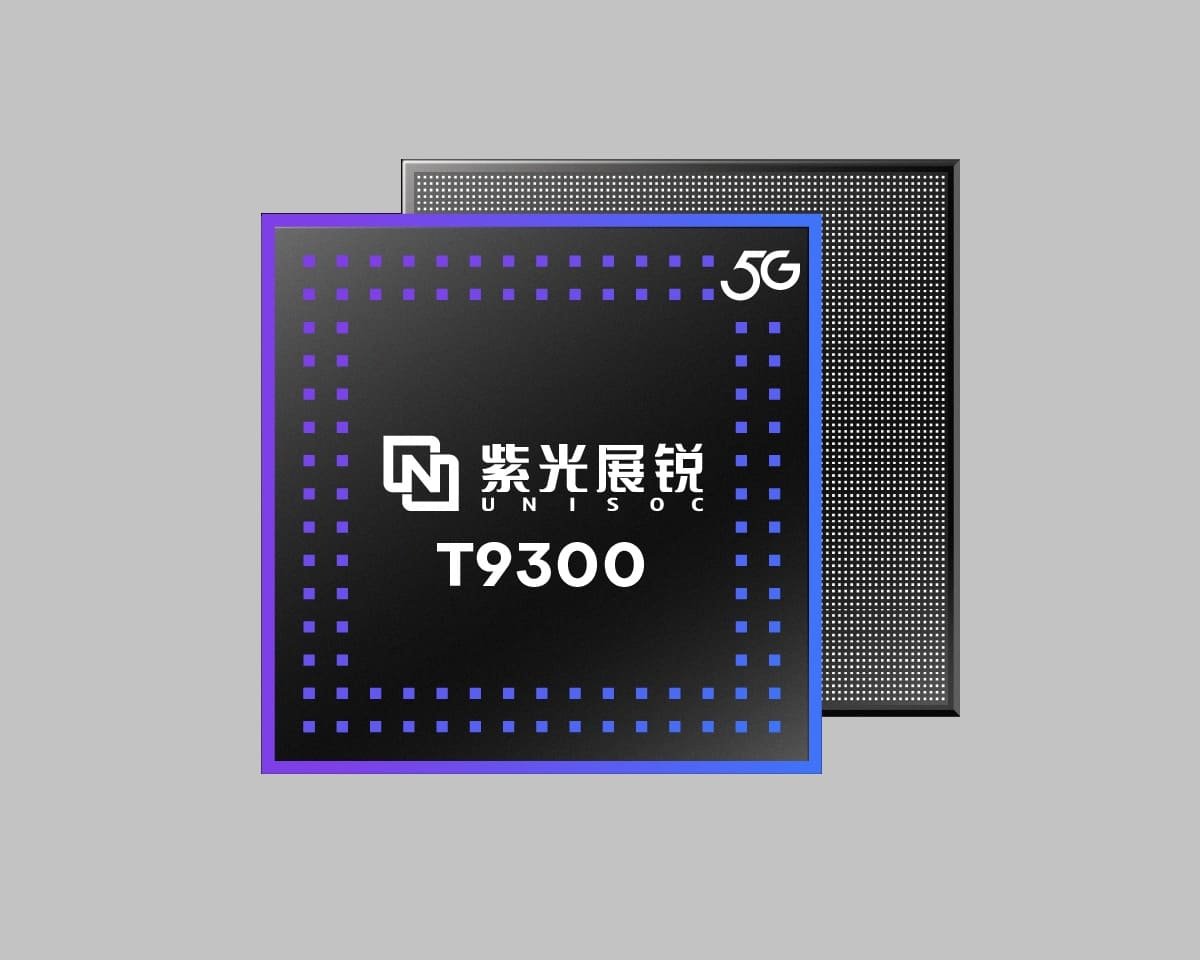
Unisoc has introduced its latest mobile platform, the T9300 5G chipset, marking a significant step forward for the company’s mid-range processor lineup. Designed for smartphones that demand high performance, improved imaging, and better gaming stability, the T9300 positions itself as an efficient and feature-rich SoC. While Unisoc did not make a loud announcement, the capabilities of this chipset make it one of the most notable releases in its category.
The T9300 is built with a focus on delivering stronger visual performance and smoother gaming experiences, backed by next-generation connectivity support.
The chipset is manufactured using a 6nm process, offering a balance of speed and energy efficiency. The CPU includes two Cortex A78 performance cores clocked at 2.4GHz and six Cortex A55 efficiency cores running at 2.2GHz. According to Unisoc, this configuration delivers around 38 percent better power efficiency compared to the previous generation.
Graphics processing is handled by the Mali G57 dual-core GPU. Early benchmark results place the T9300 at around 550,000 points on AnTuTu V10, placing it firmly in the competitive mid-range bracket.
Beyond raw performance, the T9300 introduces notable improvements in storage technologies and global connectivity.
The chipset supports LPDDR4X memory and UFS 2.2 storage, ensuring quick app loading, smoother multitasking, and efficient data handling.
Connectivity is one of the strongest aspects of the T9300. It supports 3GPP Release 17, 5G NR NTN satellite communication, and 5G MBS broadcast. The chipset also includes AI-driven network management for better signal stability and lower power usage.
It supports SA and NSA 5G modes, dual VoNR, VoWiFi, and complete compatibility across 2G, 3G, 4G, and 5G bands.
The T9300 brings one of the biggest upgrades Unisoc has introduced to its imaging system.
The chipset uses the latest Vivimagic imaging engine paired with a quad-core ISP. It supports camera sensors up to 200 megapixels, 32-megapixel output at 25fps with zero shutter lag, and 20-megapixel dual camera setups.
The ISP brings improved multi-frame noise reduction, time-domain noise suppression, upgraded 3A algorithms, and AI-enhanced night mode. Users can expect cleaner low-light photos, refined portrait outlines, and better HDR performance.
The T9300 also receives several improvements in sound processing and playback.
A dedicated DSP powers HiFi-grade audio output. The chipset supports enhanced echo control, advanced noise reduction, and upgraded stereo playback, improving both media consumption and call quality.
Unisoc has added multiple display features to make the T9300 suitable for modern high-refresh screens.
The chipset supports FHD+ resolution at 144Hz, 1.5K at 90Hz, HDR10+, and is Netflix certified. It also includes VRR (variable refresh rate) and several eye protection modes for comfortable viewing.
Unisoc has placed a strong emphasis on gaming performance in the T9300.
The T9300 integrates the Unisoc Miracle Gaming engine, which aims to deliver better frame stability, efficient network handling, and improved graphics processing. It also includes AI codec enhancements to maintain voice clarity even in weaker network conditions.
The Unisoc T9300 5G chipset brings meaningful improvements across performance, imaging, gaming, and connectivity. With its 6nm design, stronger ISP capabilities, and AI-powered enhancements, the T9300 positions itself as a solid option for smartphone manufacturers looking to offer reliable mid-range performance with premium features. As more devices adopt this chipset, consumers can expect smoother visuals, improved photography, and more consistent 5G experiences.
Via: (Source), Image Credits: Unisoc T9300


Comments