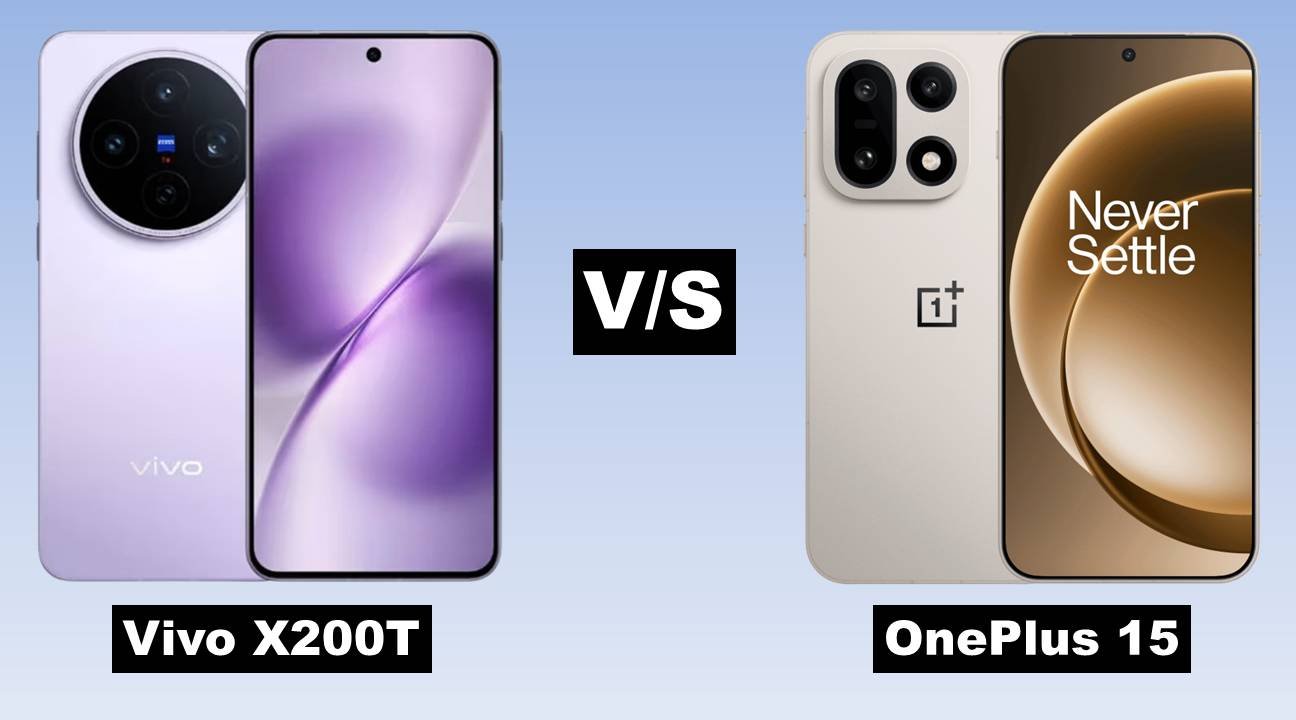
The flagship smartphone segment in 2026 is heating up fast, and two names dominating the conversation are Vivo X200T and OnePlus 15. Both devices bring top-tier hardware, cutting-edge processors, premium designs, and powerful cameras—but they cater to slightly different audiences.
The Vivo X200T focuses on balanced innovation with camera excellence and battery efficiency, while the OnePlus 15 pushes performance boundaries with aggressive charging speeds and a high-refresh-rate display. Let’s break down how these two flagships compare in real-world usage.
Both phones embrace a premium aesthetic, but their approach to design differs.
The Vivo X200T features a glass front and back with an aluminum alloy frame. It feels solid and well-balanced despite its 203–205g weight. Vivo also includes IP68/IP69 protection, making it resistant to dust, immersion, and high-pressure water jets.
The OnePlus 15 is slightly larger and heavier, weighing up to 215g. It uses Gorilla Glass Victus 2 on the front and offers multiple back finishes, including glass and fiber-reinforced plastic. Its IP68/IP69K rating adds even stronger water resistance, and the ceramic-like rear coating enhances durability and grip.
Verdict: The OnePlus 15 feels more rugged and industrial, while the Vivo X200T offers a cleaner, more elegant flagship design.
Display quality is a key selling point for both devices.
The Vivo X200T comes with a 6.67-inch AMOLED display featuring a 120Hz refresh rate, HDR10+ support, and an impressive 5000 nits peak brightness. The panel delivers vibrant colors, excellent outdoor visibility, and smooth scrolling.
The OnePlus 15 steps things up with a 6.78-inch LTPO AMOLED display and a blazing-fast 165Hz refresh rate. It supports Dolby Vision, HDR10+, and HDR Vivid, making it ideal for gaming and multimedia consumption. While its peak brightness is lower than Vivo’s, the LTPO tech improves power efficiency.
Verdict: Gamers and content enthusiasts will appreciate the OnePlus 15’s higher refresh rate, while the Vivo X200T shines in brightness and color accuracy.
Performance is where these two phones clearly define their identities.
The Vivo X200T runs on the MediaTek Dimensity 9400+ (3nm) chipset, paired with the Immortalis-G925 GPU. It delivers excellent efficiency, smooth multitasking, and strong thermal control. The phone ships with Android 16 and OriginOS 6, with support for up to five major Android updates.
The OnePlus 15 is powered by the Snapdragon 8 Elite Gen 5 (3nm) chipset, featuring Oryon V3 cores and the Adreno 840 GPU. This is one of the most powerful mobile processors available, making it ideal for heavy gaming, advanced AI tasks, and demanding workloads. It runs Android 16 with OxygenOS 16, known for its clean and fast user experience.
Verdict: The OnePlus 15 delivers unmatched raw performance, while the Vivo X200T offers a more balanced and efficient flagship experience.
Both phones feature triple 50MP rear camera systems, but their priorities differ.
The Vivo X200T focuses heavily on photography, offering a 50MP wide sensor with OIS, a 50MP periscope telephoto lens with 3x optical zoom, and a 50MP ultrawide camera with autofocus. Zeiss optics, T* coating, and 3D LUT support give it a professional photography edge.
The OnePlus 15 counters with a versatile setup that includes a 50MP main sensor, a 3.5x periscope telephoto lens, and a 50MP ultrawide camera. It stands out in video, supporting 8K recording, 4K at up to 120fps, Dolby Vision, and advanced LUT previews.
Verdict: Choose Vivo X200T for photography and color science; choose OnePlus 15 if video recording is a top priority.
Both devices use a 32MP front camera with 4K video support. The Vivo X200T leans toward natural skin tones, while the OnePlus 15 offers autofocus and more advanced stabilization for video calls and vlogging.
Battery performance is a major differentiator.
The Vivo X200T packs a 6200mAh battery with 90W wired charging, 40W wireless charging, reverse charging, and bypass charging. It’s built for long endurance and consistent performance.
The OnePlus 15 goes all out with a massive 7300mAh battery and ultra-fast 120W wired charging, reaching 50% in just 15 minutes. It also supports 50W wireless charging and multiple fast-charging standards.
Verdict: The OnePlus 15 clearly wins on battery size and charging speed, though the Vivo X200T remains excellent for all-day use.
Both phones support Wi-Fi 7, NFC, infrared blasters, stereo speakers, and ultrasonic in-display fingerprint sensors. The OnePlus 15 includes Bluetooth 6.0 and USB Type-C 3.2 for faster data transfer, giving it a slight edge in connectivity.
The Vivo X200T starts at ₹59,999, making it a strong value flagship with premium features at a relatively accessible price.
The OnePlus 15, priced from ₹72,999, positions itself firmly in the ultra-premium segment with top-tier performance and charging technology.
The Vivo X200T is ideal for users who want a balanced flagship with excellent cameras, long battery life, and extended software support at a competitive price.
The OnePlus 15 is built for enthusiasts who demand maximum performance, faster charging, superior gaming capabilities, and advanced video features—without compromise.
If value and photography matter more, the Vivo X200T is the smarter choice. If raw power and speed are your priorities, the OnePlus 15 stands at the top of the Android flagship ladder.
To know more about our platform, visit our About Us page.


Comments