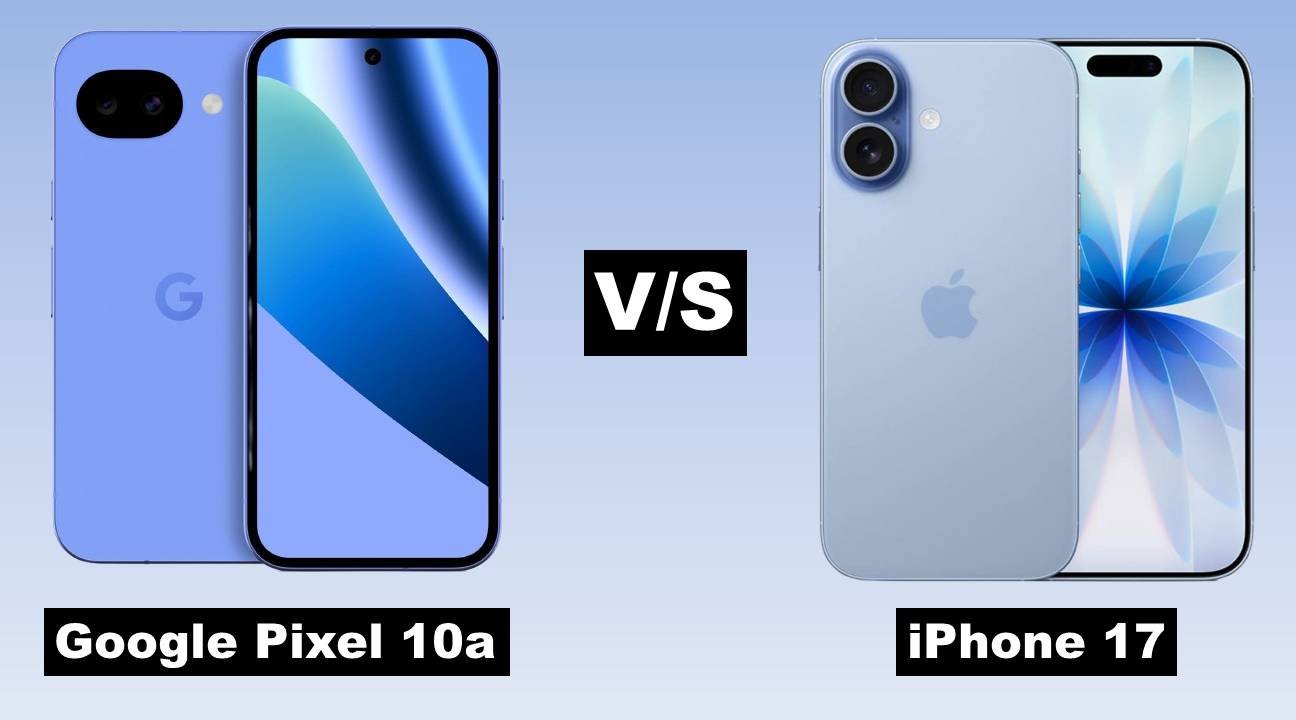
The battle between Android and iOS continues to shape the smartphone market, and the comparison between the Google Pixel 10a and the Apple iPhone 17 highlights two very different philosophies. One focuses on AI-driven smart features and long-term software support, while the other delivers refined hardware, seamless ecosystem integration, and premium build quality.
Although the Pixel 10a sits in the premium mid-range category and the iPhone 17 is a flagship device, both target users who want reliability, strong cameras, and a future-ready smartphone experience.
The Pixel 10a maintains Google’s minimalist design language. It features Gorilla Glass 7i protection on the front, an aluminum frame, and a durable plastic back. The device weighs 183 grams and includes IP68 certification for dust and water resistance up to 1.5 meters.
The iPhone 17 showcases Apple’s premium craftsmanship with a glass front and back paired with an aluminum frame. It uses Ceramic Shield 2 protection and supports water resistance up to 6 meters, offering stronger durability in extreme conditions. At 177 grams, it feels lighter and more compact.
Users who prefer a practical and sturdy design will appreciate the Pixel 10a, while those seeking premium materials and refined aesthetics may prefer the iPhone 17.
Both devices feature 6.3-inch displays, but their technologies deliver slightly different viewing experiences.
The Pixel 10a offers a P-OLED display with HDR support and a 120Hz refresh rate. With peak brightness reaching 3000 nits, it ensures excellent outdoor visibility and smooth scrolling.
The iPhone 17 uses a Super Retina XDR OLED panel with LTPO technology, Dolby Vision support, and adaptive refresh rates. Although its typical brightness is lower, HDR performance and color accuracy are among the best in the industry. The higher pixel density and anti-reflective coating enhance readability and sharpness.
The Pixel provides bright, smooth performance for everyday use, while the iPhone display excels in color accuracy and HDR video playback.
The Pixel 10a runs on Google’s Tensor G4 processor, designed to enhance AI features such as voice recognition, real-time translation, and intelligent photo processing. It ships with Android 16 and promises seven major Android upgrades, making it one of the longest-supported smartphones available.
The iPhone 17 is powered by Apple’s A19 chip built on a 3nm architecture. It delivers exceptional efficiency, fast app performance, and industry-leading graphics optimization. iOS 26 ensures smooth operation, strong privacy controls, and long-term reliability through Apple’s software ecosystem.
The Pixel 10a excels in AI-powered features and update longevity, while the iPhone 17 offers unmatched ecosystem integration and optimized performance.
Both smartphones deliver excellent photography but approach imaging differently.
The Pixel 10a features a 48MP main sensor and a 13MP ultrawide lens. Google’s computational photography produces natural colors, strong dynamic range, and excellent low-light results. Features like Pixel Shift and Best Take enhance everyday photography.
The iPhone 17 includes a dual 48MP camera system with sensor-shift stabilization and advanced HDR processing. Dolby Vision HDR video recording and spatial audio capture make it particularly strong for video creators. Apple’s color science produces consistent and realistic images.
For selfies, the Pixel offers a 13MP ultrawide camera, while the iPhone 17 features an 18MP TrueDepth camera with autofocus and 3D depth sensing for Face ID and portrait effects.
If you prioritize smart photography and ease of use, the Pixel excels. If you create video content or value cinematic recording quality, the iPhone 17 stands out.
Both phones include stereo speakers for immersive sound.
The iPhone 17 enhances multimedia with spatial audio recording and playback, providing a more immersive experience when watching movies or recording video.
The Pixel 10a includes Wi-Fi 6E, Bluetooth 6.0, NFC, and Satellite SOS support for emergency communication.
The iPhone 17 adds Wi-Fi 7 support, Ultra Wideband technology for precise location tracking, MagSafe compatibility, and satellite connectivity for emergency messaging and Find My services.
Apple’s ecosystem integration gives it an advantage for users invested in Apple devices, while Pixel focuses on AI-driven smart assistance.
The Pixel 10a includes a 5100 mAh battery designed for full-day endurance. It supports 30W wired charging and 10W wireless charging.
The iPhone 17 features a smaller 3692 mAh battery but benefits from Apple’s power efficiency. It supports fast wired charging, MagSafe wireless charging up to 25W, and reverse wired charging for accessories.
Pixel delivers longer battery capacity, while the iPhone balances efficiency with advanced wireless charging convenience.
The Pixel 10a starts at $499, making it a strong value option with long-term software support and smart features.
The iPhone 17 starts around $781, reflecting its flagship hardware, premium build quality, and deep ecosystem integration.
The Pixel 10a and iPhone 17 represent two different smartphone experiences.
The Pixel 10a is ideal for users who want a clean Android interface, intelligent AI features, excellent photography, and industry-leading software support.
The iPhone 17 is designed for users who value premium craftsmanship, seamless ecosystem integration, powerful performance, and professional-grade video recording.
If affordability and long-term Android updates matter most, the Pixel 10a is the smarter buy. If you want a polished flagship experience within Apple’s ecosystem, the iPhone 17 remains one of the best choices available.
To know more about our platform, visit our About Us page.


Comments